
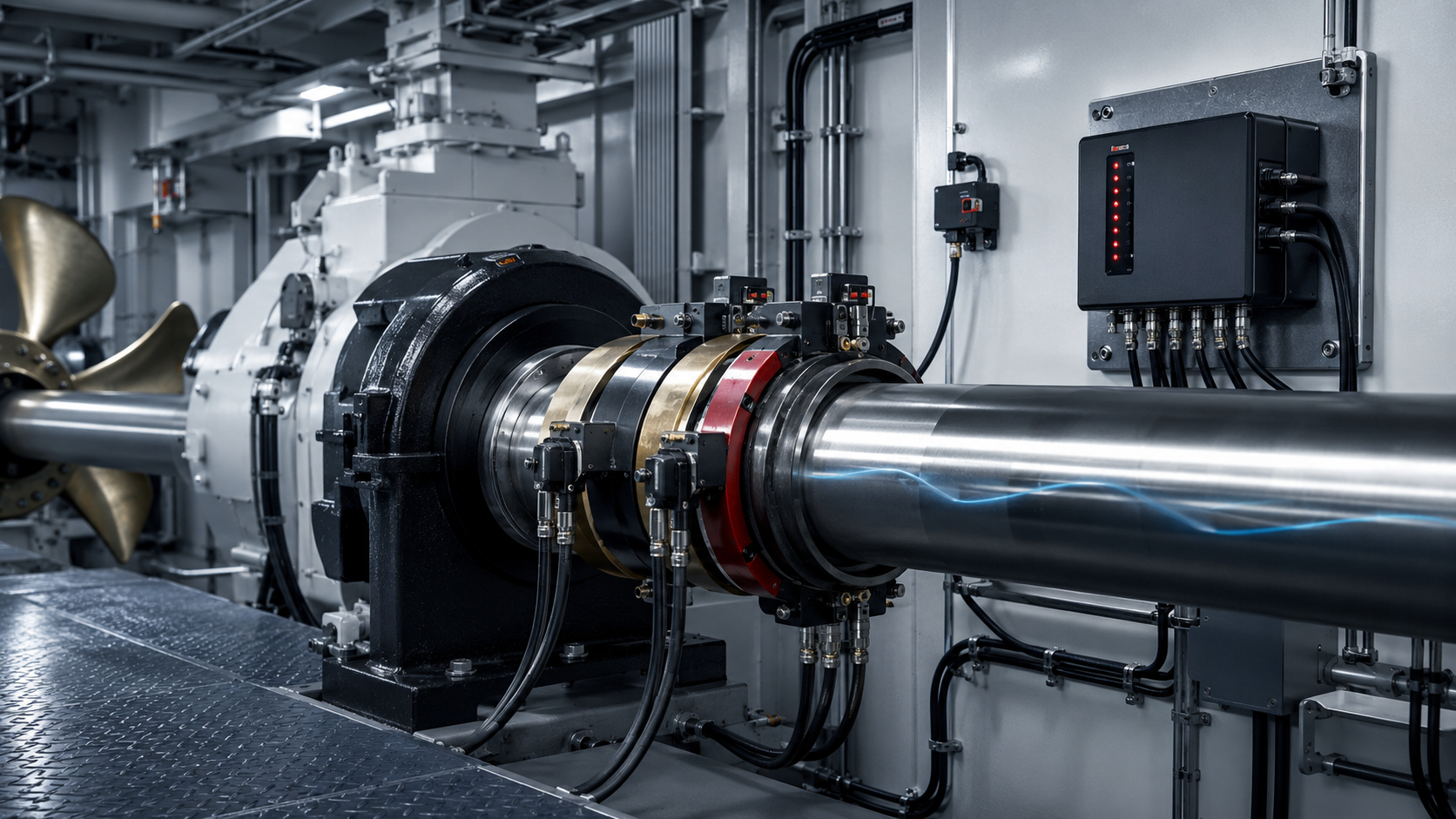
Active Shaft Grounding System
Dynamic shaft-current sinking for naval low-signature platforms, holding shaft-to-hull potential below 2 mV.
Passive Bonding Alone Will Not Hold Shaft Potential Low Enough
On low-signature platforms the shaft is a signature contributor as well as a corrosion and bearing-wear concern, and it has to be controlled rather than simply bonded.
Shaft Current Sunk Actively, Under Closed-Loop Control
A separate sensing ring measures shaft-to-hull potential while the power ring carries the working current, so potential is driven low and held there across the operating range.
Sensed Shaft Potential, Actively Sunk Current
- Sensing ring signal
- Actively regulated current
Three Steps, Continuously
- 01
A separate sensing ring measures shaft-to-hull potential without carrying the working current.
- 02
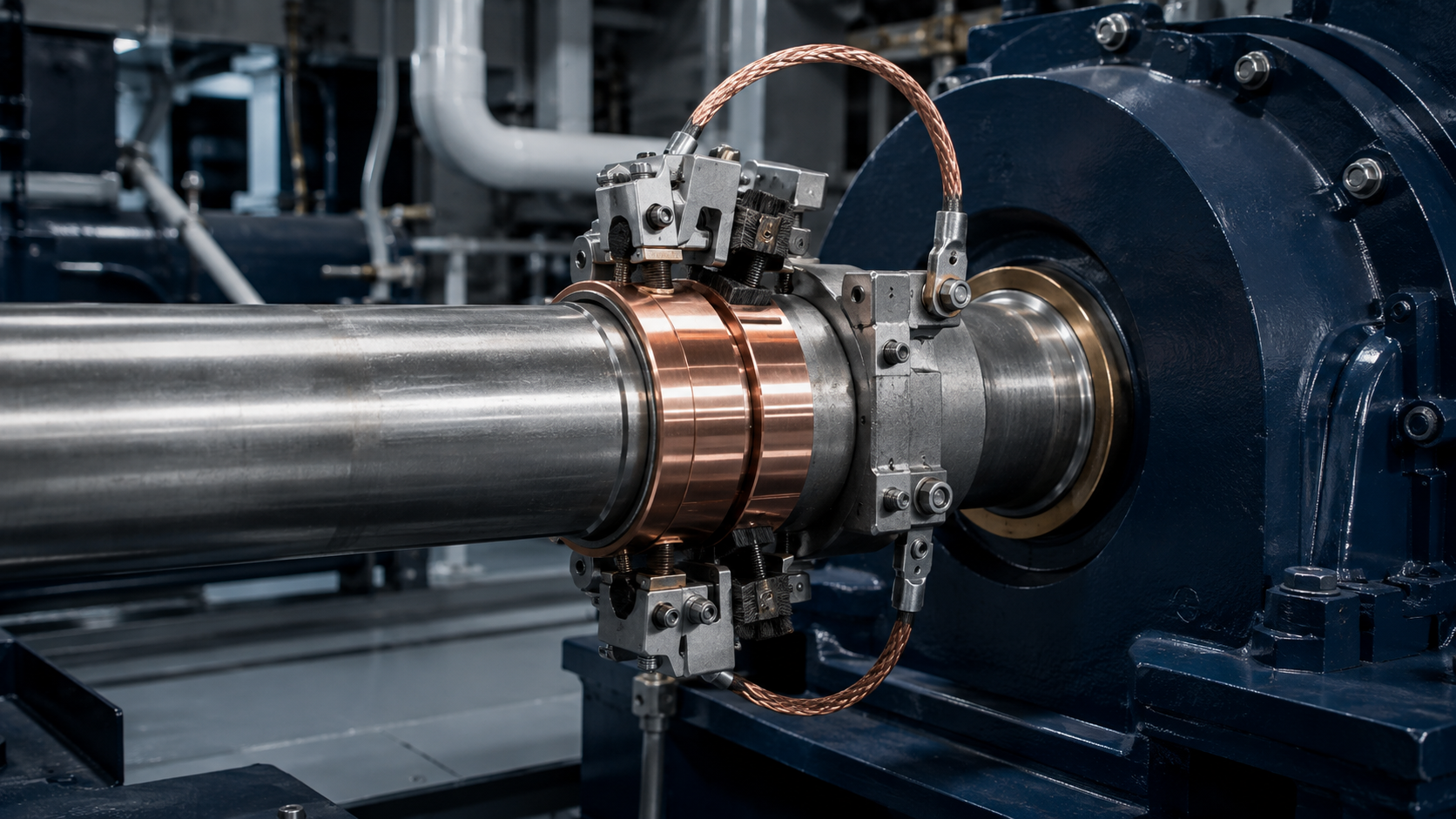
A separate power ring carries the sunk current between the shaft and the hull.
- 03
The controller regulates the current so the measured shaft-to-hull potential is held below the set value.
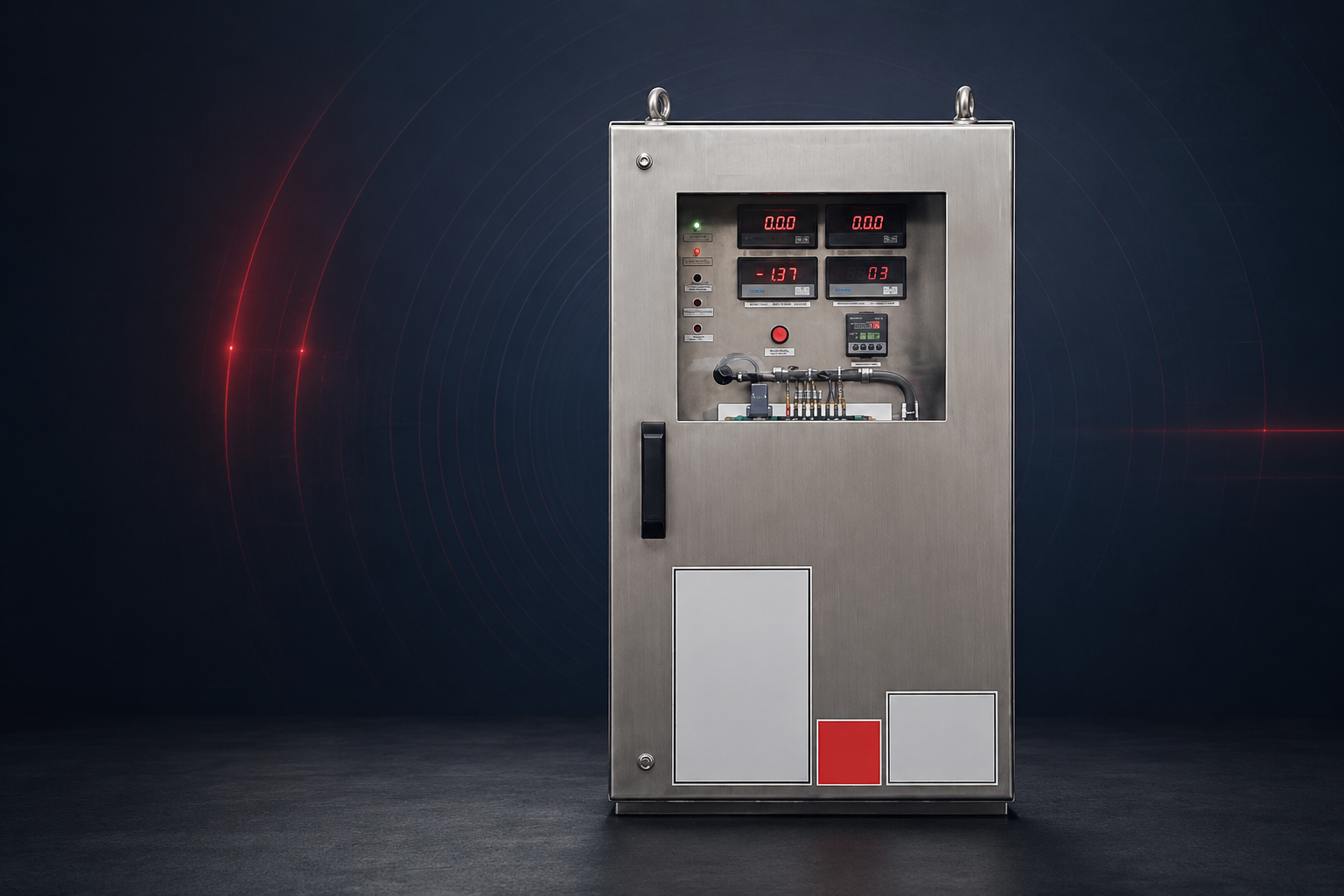
Controlled, Monitored And Integrated
- Shaft-to-hull potential held below 2 mV
- Separate power and sensing rings for noise separation
- Complete slip-ring and brushing arrangement supplied as a set
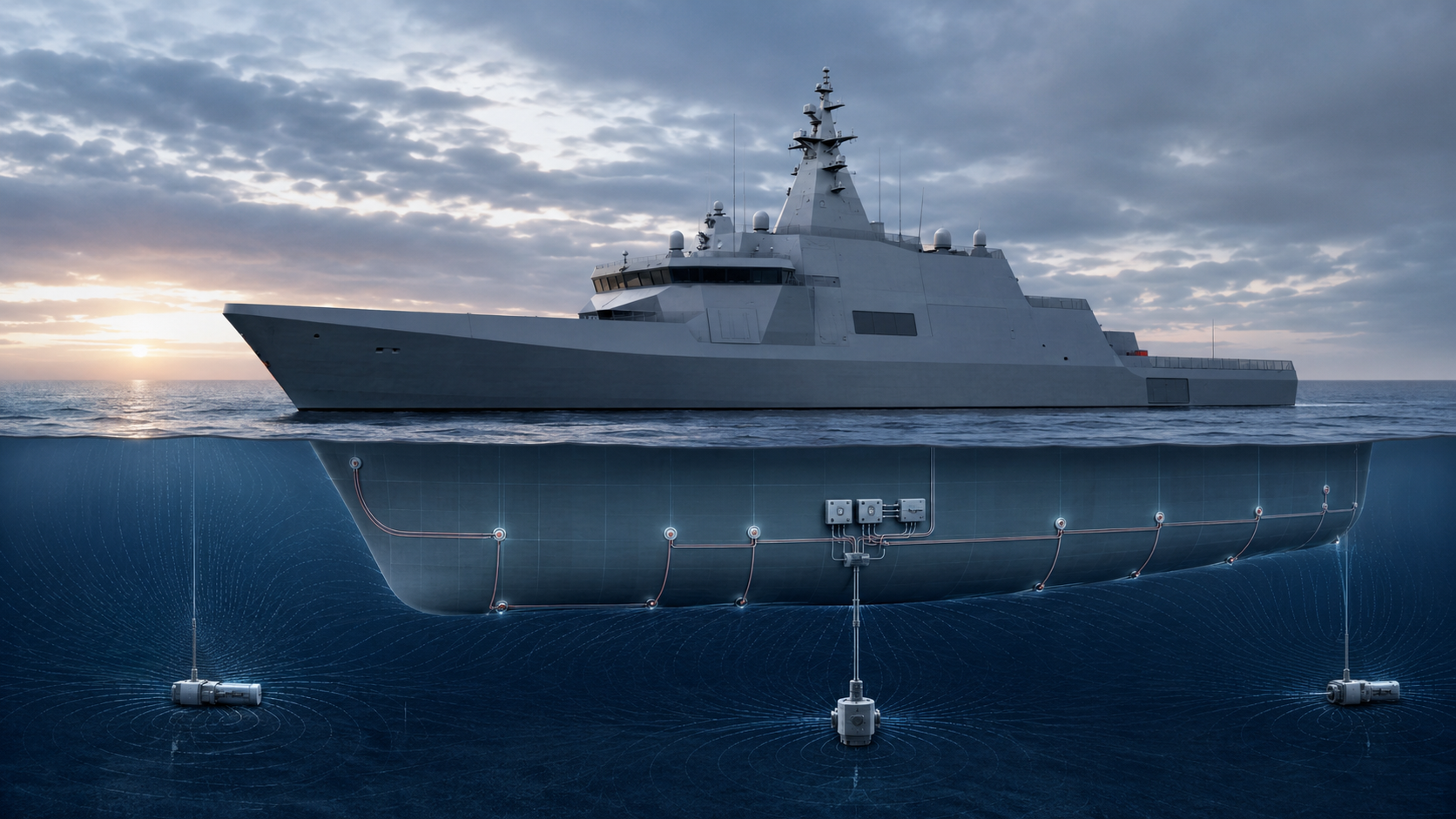
Specified On Naval Low-Signature Platforms, In Newbuilding And In Refit, With Logging And Platform Management Transmission.
- Naval low-signature platforms
- Platforms where shaft-related ELFE contributions must be controlled
- Installations operated together with low signature ICCP
Discuss Active Shaft Grounding
Share the shafting arrangement, shaft potential requirements and Platform Management interfacing, and we will prepare a project-specific technical proposal.