
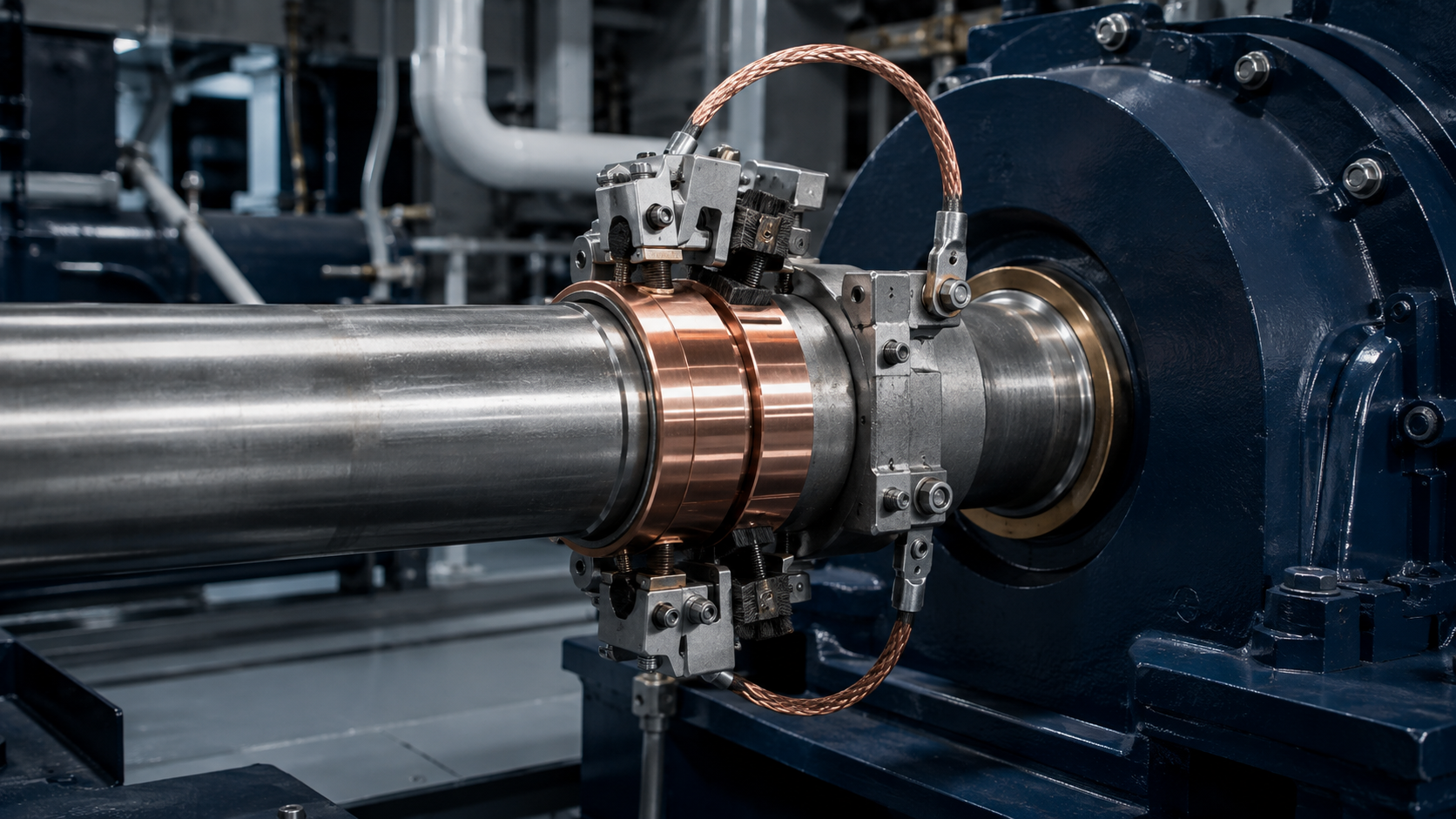
Propeller Shaft Grounding System (Passive)
A low-resistance electrical path between the rotating shaft and the hull, overcoming bearing oil-film isolation.
The Bearing Oil Film Isolates The Shaft From The Hull
Without a deliberate bonding path, shaft-to-hull potential develops and current finds its way through the bearings, while the cathodic protection path through the propeller stays incomplete.
A Continuous, Maintainable Path Back To The Hull
A conductive slip ring with silver-graphite brushes keeps shaft potential low, with brushes that can be inspected and replaced in service and an optional monitor for shaft voltage.
Rotating Shaft Bonded Back To The Hull
- Shaft-to-hull bonding path
- Silver-graphite brush contact
Three Steps, Continuously
- 01
A conductive slip ring is fitted to the shaft and runs true with it.
- 02
Silver-graphite brushes ride on the slip ring under controlled pressure.
- 03
A short bonding cable connects the brush rigging to the hull structure.
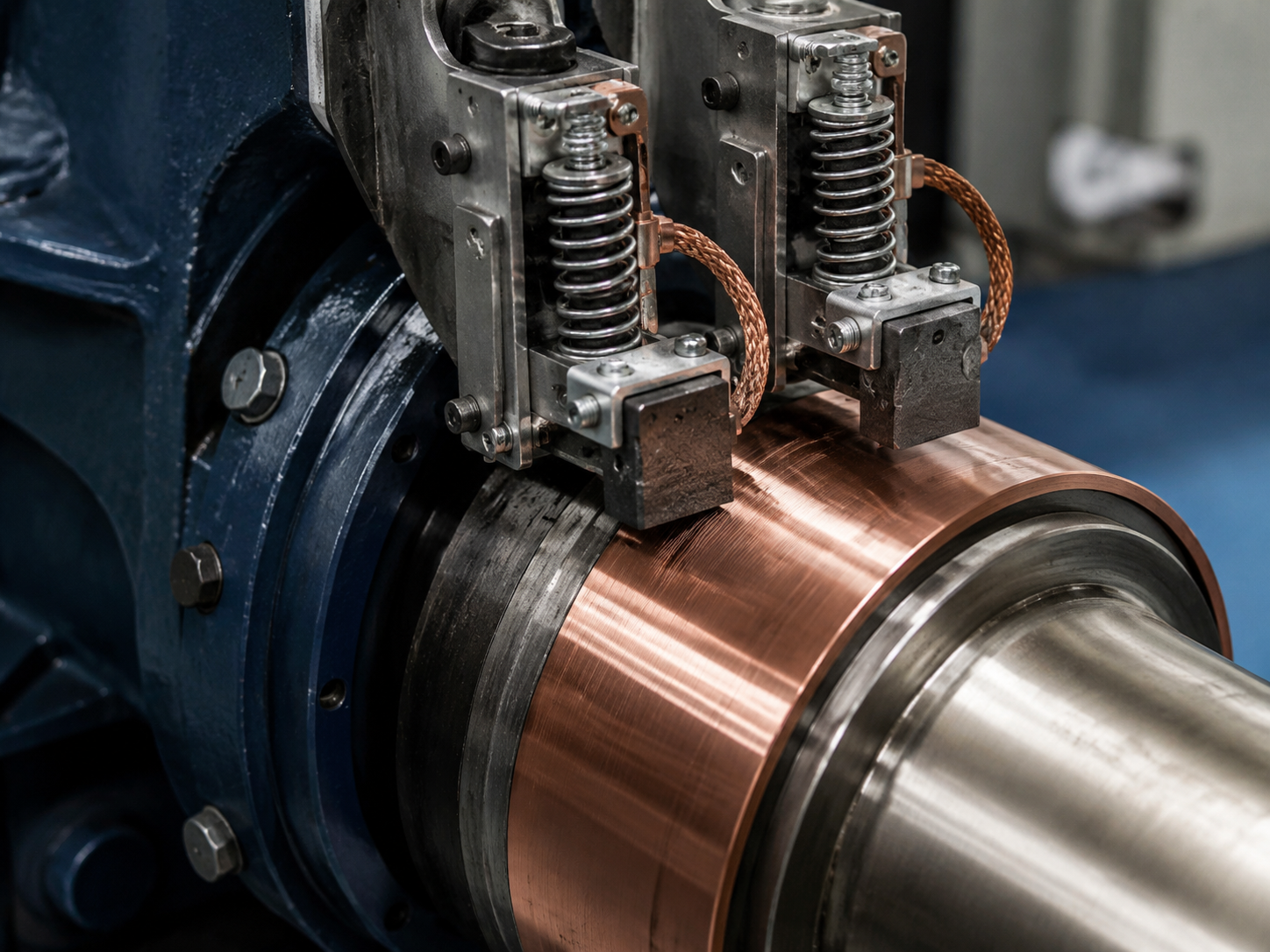
Arranged To Fit The Shafting You Already Have
- Continuous low-resistance shaft-to-hull path
- Brush pressure set for stable contact across the speed range
- Bonding path kept short to minimise resistance and inductance
Fitted To Propulsion Shafting On Commercial And Naval Vessels, At Newbuilding And At Drydock.
- Commercial vessel propulsion shafting
- Naval and government vessels where passive bonding is specified
- Vessels fitted with ICCP requiring a shafting current path
- Retrofit of shafting with elevated shaft-to-hull potential
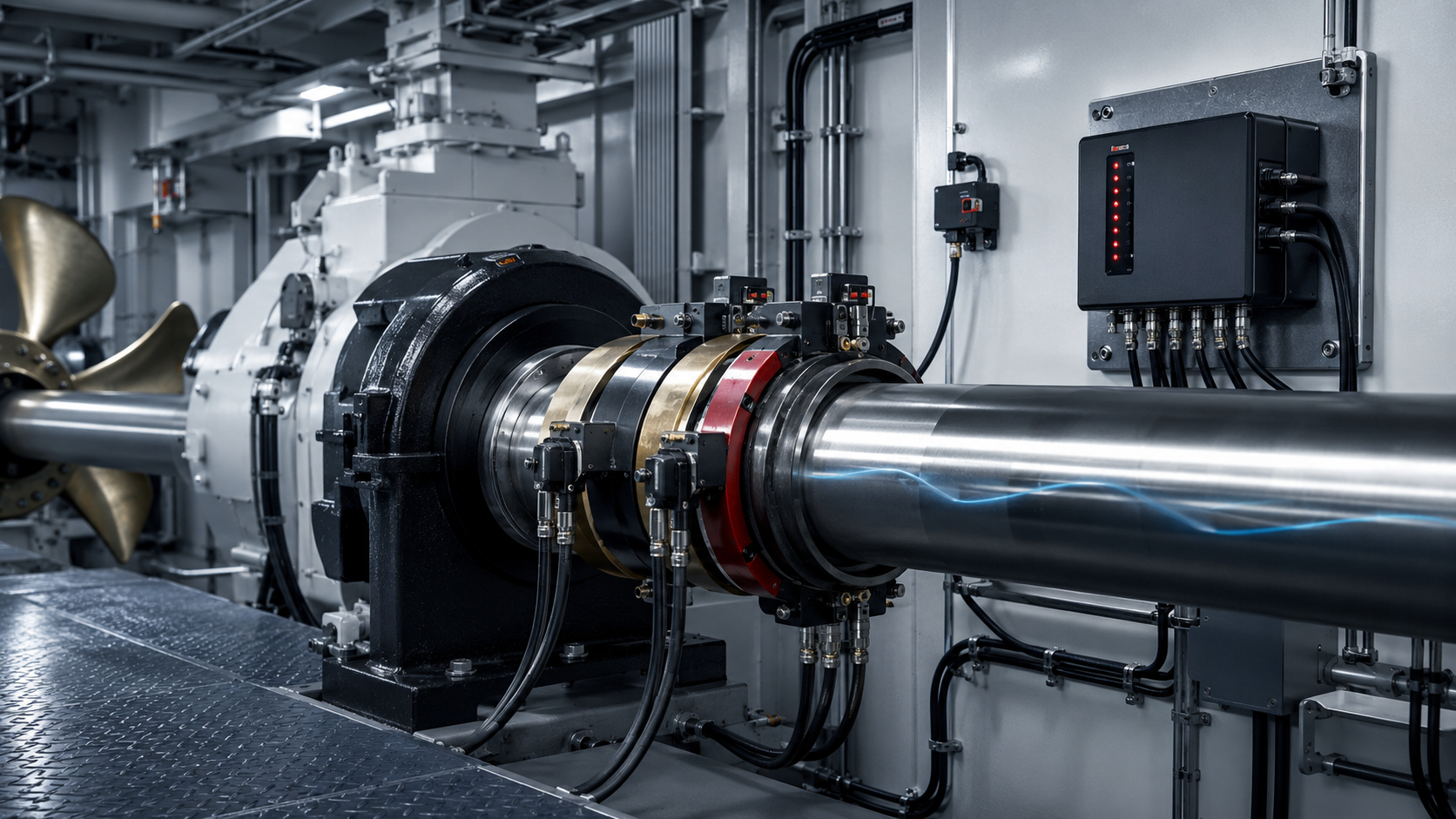
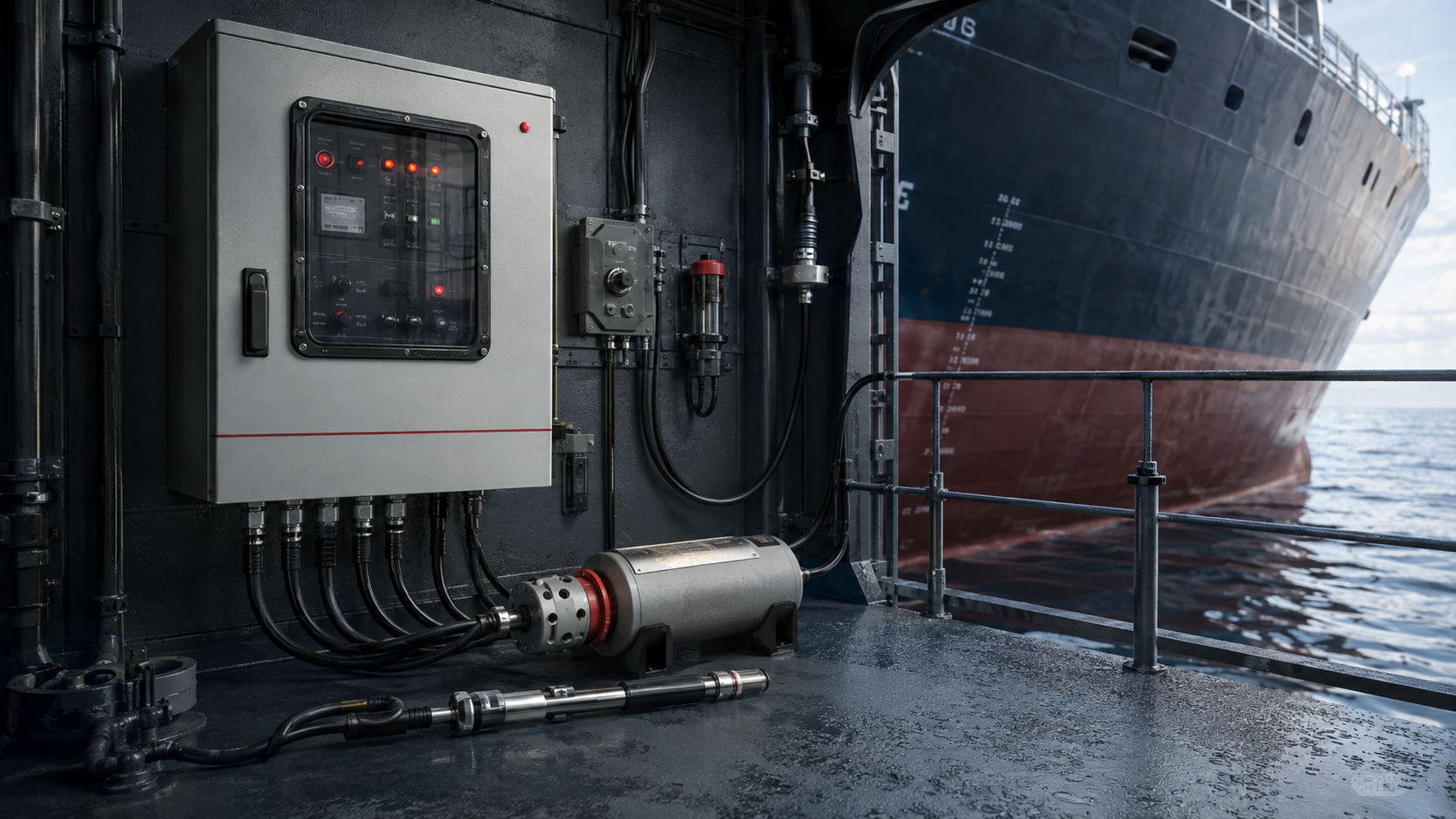
Specify A Shaft Grounding Arrangement
Send the shafting arrangement, shaft diameter and available length at the fitting position, and we will propose the slip ring, rigging and bonding arrangement.